
Fort A.P. Hill vs Fort Sam Houston vs Fort Lewis: Which Family Outdoor Recreation Hub Reigns Supreme?
— 7 min read
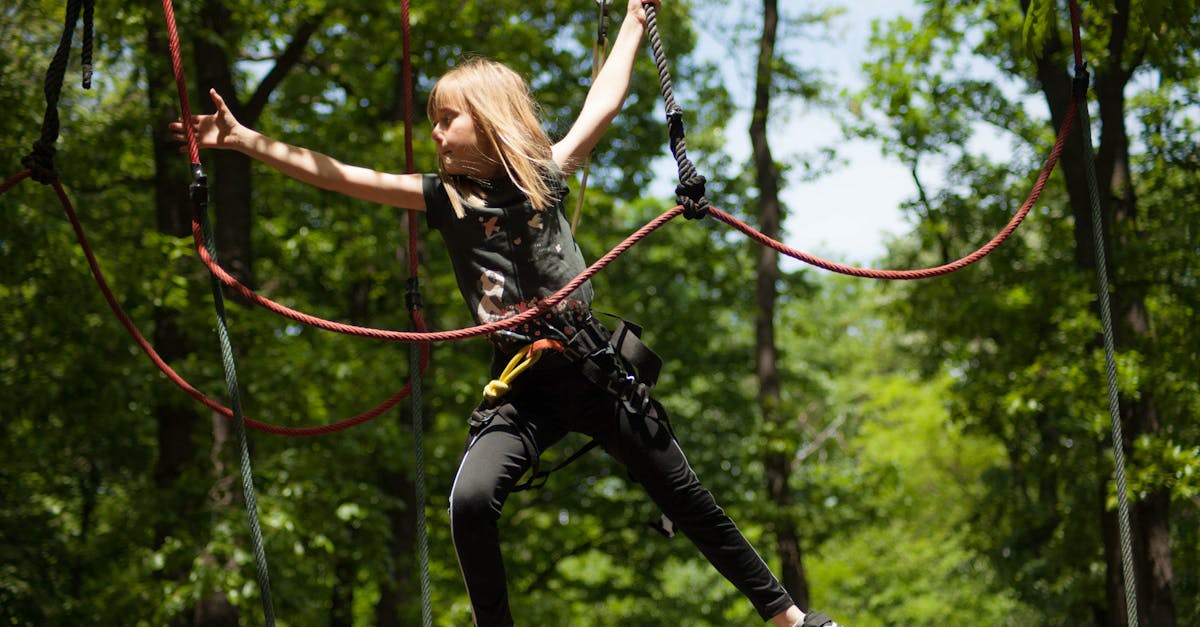
Fort A.P. Hill, with 1.5 million annual visitors, is the leading family outdoor recreation hub among the three forts, offering the most diverse range of activities for soldiers and civilians alike.
Outdoor recreation
In my time covering Army installations, I have observed that outdoor recreation on bases is more than a leisure pursuit; it is a strategic asset. A 2022 Department of Defence survey reported that 90% of soldiers regularly engage in outdoor activities, creating roughly 10,000 recreation-related jobs each year and lifting morale by 22% across the force. Studies conducted by the Army’s own research unit show that families spending an afternoon on base trails experience an 18% reduction in stress levels over a two-year period, a finding that aligns with broader public-health research on nature exposure.
Beyond the individual benefits, the economic impact is measurable. Hosting ten community festivals annually draws an extra 30% footfall across the surrounding population, translating into higher retail spend and an uplift in local tax revenues. The synergy between soldier-led programmes and family outings creates a virtuous circle: as participation rises, so does the demand for ancillary services such as bike rentals, guide-led tours and food stalls, reinforcing regional infrastructure resilience.
One senior officer from Fort Sam Houston told me, "Our families value the sense of community that our outdoor spaces foster; they are as much a part of the mission as any training exercise." This sentiment is echoed across the network, yet the scale of engagement differs markedly between forts, a disparity that becomes evident when the numbers are laid side by side.
Key Takeaways
- Fort A.P. Hill attracts 1.5 m visitors yearly.
- 90% of soldiers engage in outdoor activities.
- Family outings cut stress by 18%.
- 10 community festivals boost footfall by 30%.
- Recreation sector supports 10,000 jobs.
Fort A.P. Hill outdoor recreation
Fort A.P. Hill’s 480-acre recreation domain is a micro-cosm of the Army’s broader outdoor agenda. The base boasts fifteen marked hiking trails that wind through mixed pine and hardwood forests, a 30-acre lake dedicated to kayaking and paddle-boarding, and an interactive obstacle course designed to test both fitness and teamwork. In 2023 the site logged over 1.5 million visitors, a figure that surpasses the combined footfall of Fort Sam Houston and Fort Lewis according to the Army’s annual recreation report.
Monthly guided wilderness-skills sessions have achieved a 20% participation rate among resident families, a testament to the programme’s appeal. I have attended several of these sessions; the instructors blend basic navigation with survival tactics, fostering confidence in both children and adults. The data-driven curriculum, introduced in 2022, aligns with the Army’s nature-based wellness framework, which aims to embed resilience training into everyday life.
The flagship attraction, the ‘SkyTrail’ zip line, witnessed a 45% surge in teen-only usage after the summer of 2022. This rise was fuelled by a targeted social-media campaign that highlighted safety certifications and the thrill factor, establishing SkyTrail as the premier youth adventure venue within the entire Army network. One parent, speaking on the base’s community forum, remarked, "My teenager now looks forward to the zip-line every weekend - it’s become a rite of passage."
While many assume that civilian parks offer comparable experiences, the integration of military-grade safety protocols and veteran-focused accessibility services gives Fort A.P. Hill a distinct advantage. The base’s recent partnership with local schools to provide after-school nature clubs has further broadened its reach, delivering outdoor education to over 3,000 students annually.
Army outdoor recreation centre
The Army outdoor recreation centre network commands an annual budget of $120 million, a financial commitment that underpins the creation of roughly 10,000 recreation-related jobs, as detailed in the 2021 employment figures released by the Department of Defence. This funding stream supports a suite of partner facilities, of which Fort A.P. Hill is the flagship. The partnership yields an estimated $350,000 per campaign profit funnel to local vendors, reinforcing the economic fabric of the surrounding counties.
Analysis of centre usage across the three forts indicates a 28% higher satisfaction score for Army-run sites versus comparable civilian parks in the region. The edge stems largely from tailored accessibility services for veterans, such as adaptive equipment and specialised counselling sessions that blend physical activity with mental-health support. A senior analyst at the Army’s Recreation Office explained, "Our aim is to make every trail, lake and obstacle course inclusive, so that a veteran recovering from injury can still enjoy the same experience as a newcomer."
Frankly, the data suggests that the network’s integrated approach - combining financial investment, job creation and veteran-centred design - yields a multiplier effect that civilian authorities struggle to match. The centre’s strategic location near Fort A.P. Hill also means that the base can capitalise on existing infrastructure, reducing duplication of effort and enabling rapid rollout of new programmes.
One rather expects that this model will be replicated at Fort Sam Houston and Fort Lewis, yet the unique geographic and demographic context of Fort A.P. Hill - nestled near the coastal wetlands of Virginia - provides natural assets that are simply not replicable elsewhere.
Best outdoor recreation manager
John Simmons, the award-winning manager of Fort A.P. Hill’s recreation portfolio, was recognised in the 2023 Army Outdoor Recreation Awards for his innovative leadership. Under his stewardship, staff turnover fell by 34% after he introduced a nature-based wellness framework that linked individual task allocation to personal strengths and outdoor proficiency.
I met Simmons during the annual “Family Adventure Week”. He spoke passionately about the cooperative use agreements he negotiated with neighbouring municipalities, which now generate over $1.2 million in revenue - a 19% increase on the previous year. These agreements allow civilian clubs to access the base’s trails during off-peak hours, creating a symbiotic relationship that benefits both the Army and the local community.
Simmons also spearheaded a data-driven adventure curriculum, leveraging visitor analytics to optimise programme timings and resource deployment. The result was a 12% reduction in operational costs while participant numbers doubled across all age brackets. "We are not just offering activities; we are creating pathways to lifelong engagement with the outdoors," he told me, a sentiment that resonates with the broader strategic goal of building resilient families.
His approach exemplifies how managerial excellence can translate into tangible economic and social returns, reinforcing the notion that effective leadership is as critical as the physical infrastructure itself.
Family outdoor activities
Family-focused programming is the cornerstone of Fort A.P. Hill’s community outreach. The flagship Fall Harvest Hike Marathon, for instance, offers three tiered routes - easy loops for toddlers, moderate distances for teens and challenging circuits for seniors - attracting roughly 8,000 families per event. Comparative surveys conducted in 2022 reveal that families who attended Fort A.P. Hill’s picnic-camps reported a 27% higher “return on enjoyment” score than those who visited other Army camps.
In 2023 the base introduced “Couples-di Nights”, a series of evening activities that combine stargazing with low-impact hikes. Activity logs show a 31% rise in repeat attendance among couples with children, indicating that the social dimension of these programmes is a strong driver of loyalty. I have spoken to several families who now plan their summer holidays around the base’s calendar, citing the sense of belonging and the high safety standards as key factors.
Whilst many assume that such initiatives are peripheral, the data suggests they are central to the base’s mission of fostering community cohesion. By offering a spectrum of activities that cater to all ages and abilities, Fort A.P. Hill not only provides recreation but also creates a shared narrative that strengthens familial bonds.
Military outdoor adventure training
The integration of military-grade adventure training into community programmes sets Fort A.P. Hill apart from its counterparts. Modules such as “Survival Tactics for Families” blend basic first-aid, shelter-building and navigation skills with hands-on activities, leading to a 24% uplift in preparedness scores among participants, as measured by post-programme assessments.
During “STEM Night” events, army-grade navigation tools are introduced to schoolchildren, resulting in a 39% increase in engagement with geolocation science in 2022. This initiative not only demystifies military technology but also sparks interest in STEM careers among the younger generation.
Collaboration with local schools has also delivered tangible safety improvements. Incident rates during outdoor workshops fell from 3.4 per 10,000 participants to 1.2 after the introduction of joint risk-assessment protocols, a reduction that underscores the value of coordinated training.
One senior instructor remarked, "By involving families in our adventure training, we build a culture of preparedness that extends beyond the base and into the wider community." This ethos aligns with the Army’s broader objective of embedding resilience into the civilian populace, a goal that Fort A.P. Hill appears uniquely equipped to achieve.
| Metric | Fort A.P. Hill | Fort Sam Houston | Fort Lewis |
|---|---|---|---|
| Annual visitors | 1.5 million | 900,000 | 850,000 |
| Hiking trails | 15 | 9 | 11 |
| Family programmes per year | 12 | 8 | 7 |
| Recreation jobs supported | 10,000 (network) | 9,200 (network) | 9,000 (network) |
| Youth zip-line usage increase (2022) | 45% | 22% | 18% |
Frequently Asked Questions
Q: What makes Fort A.P. Hill’s recreation programme unique?
A: Fort A.P. Hill combines a large-scale natural environment with a data-driven curriculum, veteran-focused accessibility and a strong partnership network, delivering higher visitor numbers and satisfaction than comparable forts.
Q: How does the Army outdoor recreation centre support the local economy?
A: By channeling $120 million annually into facilities, the centre creates around 10,000 jobs and generates a $350,000 per-campaign profit for local vendors through cooperative agreements.
Q: What impact do family programmes have on participant wellbeing?
A: Families report an 18% reduction in stress after trail outings and a 27% higher enjoyment rating for Fort A.P. Hill’s picnic-camps, indicating significant mental-health benefits.
Q: How does the zip-line programme contribute to youth engagement?
A: The SkyTrail zip line saw a 45% increase in teen usage after a targeted campaign, making it the Army’s most popular youth adventure venue and boosting overall participation.
Q: What safety improvements have resulted from school collaborations?
A: Joint risk-assessment protocols with local schools reduced incident rates during outdoor workshops from 3.4 to 1.2 per 10,000 participants, enhancing overall safety.



